With the continuous development of the data center industry, cooling systems have become crucial for ensuring peak performance and stable operation of equipment. Servers generate a large amount of heat under long-term high load and harsh operating conditions, making the choice of materials for cooling infrastructure particularly important. 304 and 316 stainless steel alloys, with their excellent durability, corrosion resistance, and heat exchange efficiency, can effectively cope with practical application challenges such as high heat loads and ethylene glycol cooling media, making them core materials for building efficient, reliable, and scalable cooling systems for modern data centers.
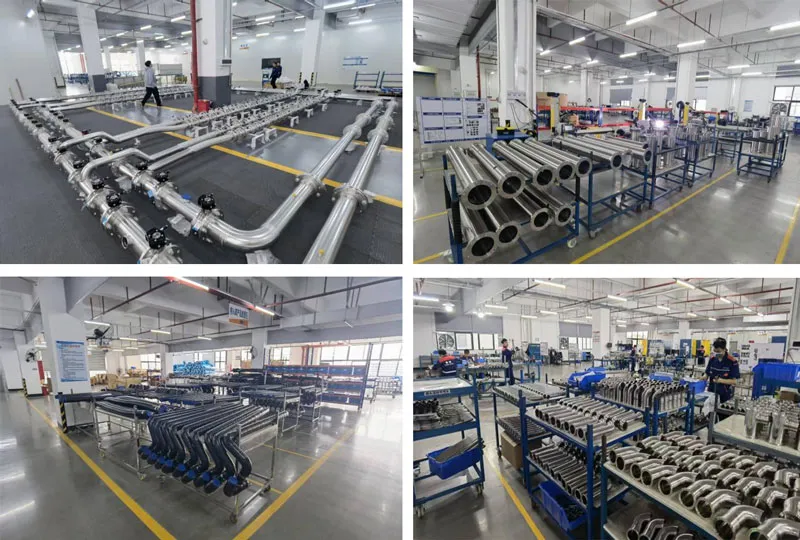
Core Classifications (by Material/Structure)
1. Metal Liquid Cooling Pipes (High Pressure/Fixed/Long Life)
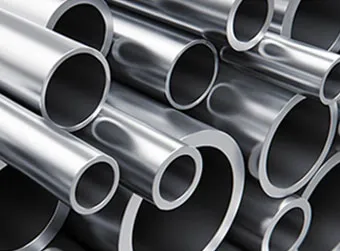
Stainless Steel Pipes (304/316L)
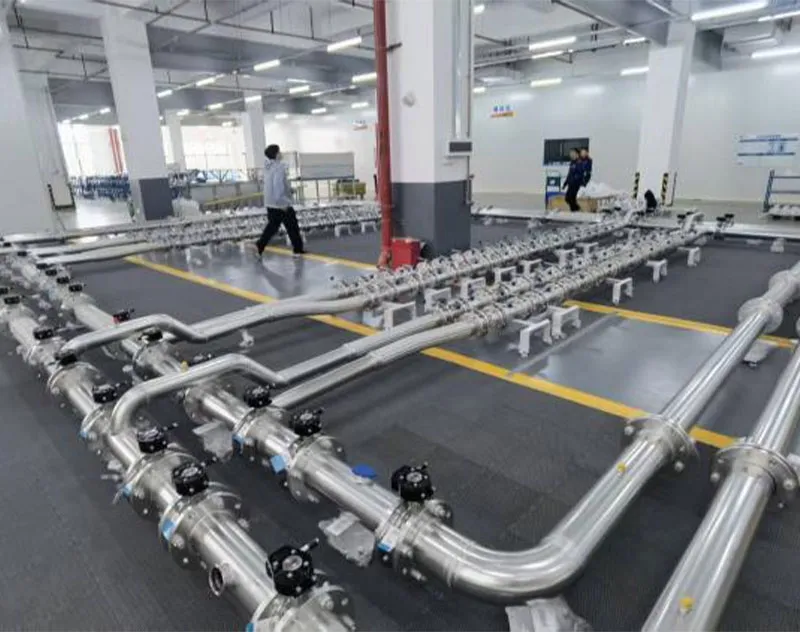
304 Stainless Steel Liquid Nitrogen Cooling Piping
Product Overview
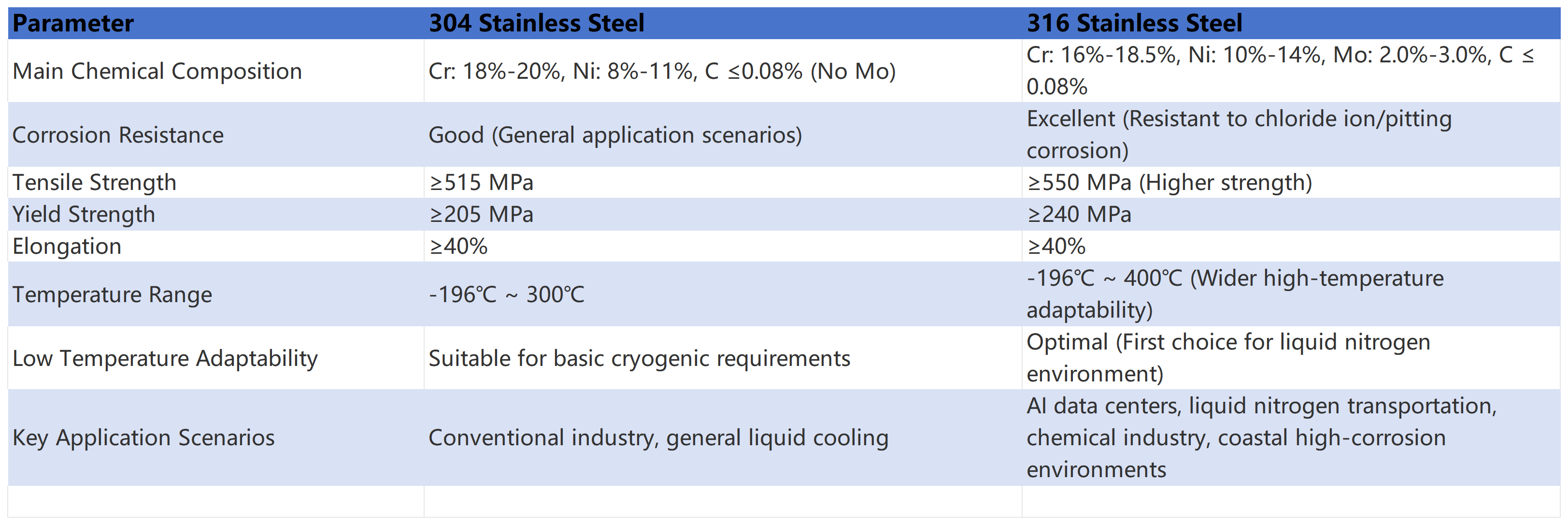
304 stainless steel is a general-purpose austenitic stainless steel, also known as 18/8 stainless steel (18% chromium, 8% nickel). It possesses excellent corrosion resistance, heat resistance, and low-temperature performance, making it the fundamental choice for liquid nitrogen cooling piping in AI data centers.
Suitable for AI data center cooling systems in normal environments, it can operate stably within a temperature range of -196°C to 300°C and has good machinability and weldability.
Key Advantages:
Excellent resistance to atmospheric and freshwater corrosion
Exceptional low-temperature toughness, no embrittlement in liquid nitrogen environments
Good weldability, enabling seamless connections
High cost-effectiveness, offering significant performance advantages
Applicable pipe diameter range: DN10 ~ DN300
316L Stainless Steel Liquid Nitrogen Cooling Pipes
Product Overview
316L stainless steel is an austenitic stainless steel with added molybdenum compared to 304 stainless steel. Also known as marine-grade stainless steel, it boasts excellent corrosion resistance, particularly against pitting corrosion, intergranular corrosion, and stress corrosion.
Designed specifically for AI data centers in high-humidity, highly corrosive environments, with an operating temperature range of -196°C to 400°C, it offers higher strength and a longer service life, making it the preferred choice for high-end AI computing clusters.
Key Advantages:
Molybdenum-enhanced, improving resistance to pitting and intergranular corrosion by over 50%
Excellent resistance to seawater and chemical media corrosion
Higher high-temperature strength and creep strength
Service life 30-50% longer than 304 stainless steel
Applicable pipe diameter range: DN10 ~ DN500
Scenarios for choosing 304 stainless steel:
Standard indoor data center environment
Humidity below 60%, no corrosive gases, relatively dry environment
Budget-conscious projects
Pricing based on cost-effectiveness; 304 is 20-30% cheaper than 316
Small to medium-sized AI computing clusters
Moderate heat dissipation requirements; pipe diameter ≤ DN300
Short-term use or requiring regular maintenance
A comprehensive maintenance plan is in place for regular inspection and replacement.
Scenarios where 316 stainless steel is chosen: High humidity/coastal data centers
Humidity above 70%, or environments near coastlines with salt spray
Large/super-large AI computing centers
High-density computing deployment, pipe diameter ≥ DN300
Long-term use/maintenance-free requirements
Design life of 15 years or more, pursuing the lowest lifecycle cost
Special environment data centers
Involving corrosive gases, chemical environments, or special process requirements
The Impact of Material Failure:
Improper material selection can lead to significant operational failures and economic losses for data centers. For example, copper tubing systems are prone to corrosion from prolonged contact with ethylene glycol coolant, resulting in leaks, reduced heat exchange efficiency, and even system shutdown. While polypropylene is less expensive, it cannot meet the durability and high-temperature resistance requirements of high-load cooling environments. A cooling system failure will directly interrupt business operations, severely impacting the performance and safety of the cooling system and even server equipment.